


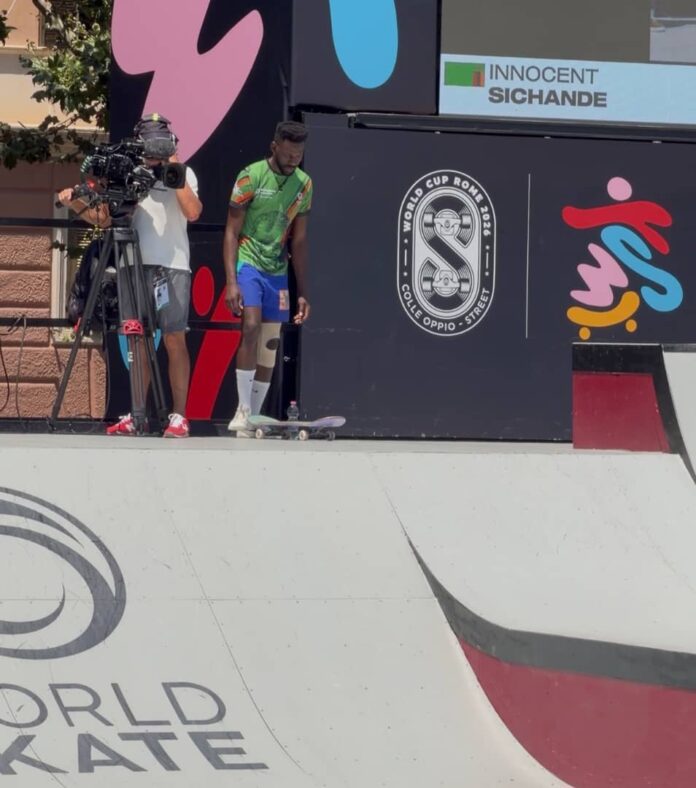
There is a vibrant and passionate, yet unrecognized, community of skateboarders in Zambia who glide along the pavements of Lusaka like a secret society of their own.
This group is colorful, diverse, and committed to their sport or even their “art” despite the odds not always being stacked in their favor. They create livelihoods for themselves through skateboarding, build community bonds, and encourage engagement in the activity among other youths, all without proper infrastructure, public support, and sometimes even in the face of active reproach from members of society and authority figures.
What most people don’t know about this community, however, is the potential for community development that they actually possess. Their lack of infrastructure is not theirs alone, but Zambia’s. As a sport, skateboarding largely flies under the radar.
Most Zambians likely don’t even know it is an actual sport in which people compete internationally, yet it has been part of many communities in this country for over a decade. Businesses that sell boards, accessories, safety kits, and offer repairs stay afloat thanks to their loyal clientele.
Yet the Zambian skateboarding community is still neither supported nor embraced by the public.
The lack of public parks in Lusaka affects the skateboarding community because public parks are commonly where skateparks are built. They serve as necessary spaces for recreation and help beautify the cities they’re in. However, despite Lusaka’s vast array of lovely infrastructure, there are no public parks.
This issue leads not only to young people flooding shopping malls on weekends with nowhere else to go and no real agenda, but it also forces Zambian skaters to zoom around on their boards in the streets and other places not designated for the activity empty parking lots, alleys, stairwells, and recreational centers like OYDC or NASDEC Sports Center. They can practice there, but not on proper, designated infrastructure.
To provide insight into the challenges, victories, and general experiences of the Zambian skateboarding scene, Zambia Skate Association Committee Member and competitive skateboarder Innocent Sichande highlighted how, in his experience, he has witnessed younger skaters from other countries perform at a significantly higher level than Zambian skaters with 10 to 15 more years of experience.
“Zambian skaters do put in hard work, dedication, and discipline,” he notes.
“But compared to the hard work, dedication, and discipline of a skater with access to better resources, equipment, and facilities, they could be 10 or 12 years old, and yet the difference is quite noticeable.”
He went on to say, “If you live in Lusaka and most parts of Zambia excluding Mongu and soon, Solwezi we don’t have a skatepark anywhere where we can practice.”
“And so if you want to get good enough to maybe compete one day, it entirely depends on how good you are naturally and how quickly you can adjust to World Skate Championship standards, which is really difficult.”
“Other African competitors normally reside in other countries like the United States of America or the United Kingdom, and have access to the right training facilities, as compared to Zambian competitors.”
He said,children need spaces where they can run and play outdoors, explore different things, and thereby grow up to be more interested in things like sports, or just be more active and healthy while also learning to socialize.
Meanwhile, longtime skateboarding fan Ntembe Mbelenga expressed that the skateboarding scene in Zambia has really grown. He noted that it started in 2010 as a few individuals skating around on empty streets, not even able to perform tricks yet.
“It took a few dedicated skaters to take the sport in Zambia to the next level. “From street culture here in Lusaka to continental competitions within Africa, we now have Zambian skaters representing us at the international level,” he said.
He said,skating is one of the most difficult sports out there,unlike other sports, it requires resilience, extreme focus, and even bravery.
“I fell in love with the sport because it challenges one’s mental and physical capacity at the same time,” he said.
“It pushes them to the limit and even teaches valuable life lessons, because when they fall, they just get back up again, no matter how many times it takes, until they get it right. Skating is practically 90% failure.”
And thus the question remains: Why doesn’t Lusaka have more free and easily accessible recreational spaces for children and youths? Is there any discussion about these facilities one day becoming part of this beautiful city?