


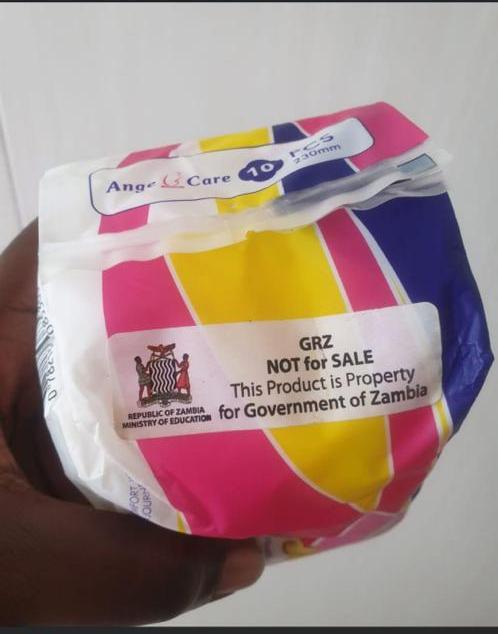
Do you think period poverty has stripped many young girls of dignity and opportunity making them vulnerable and unable to contribute to society effectively?
For thousands of girls across Zambian societies, menstruation is not just a biological reality but a monthly battle against stigma, lost education and unsafe practices.
The debate over whether pads should be free has long been contested with many arguing that if condoms can be provided for free while sex remains one’s choice, what of pads?
In many rural communities and low income households, sanitary pads remain unaffordable, leaving a girl child to resort to unsafe methods.
For many years, organizations like Donate A Pad Campaign have being fighting to end period poverty, founder, Manager and Menstrual Health advocate Sabertha Zulu describes Period poverty as a very serious concern in Zambia.
According to Ms.Zulu, many girls cannot afford sanitary pads especially in rural and low income homes making it difficult for them to perform effectively.
“The lack of sanitary pads leads some girls to use unsafe materials like old cloths and tissue during their periods as pads which can cause infections,” said Ms. Zulu.
She added that others miss school every month because they feel embarrassed, uncomfortable and afraid to stain themselves in public which affects their education and confidence levels as girls.
The notion that pads should be free has been one of the longest standing debates.
With the introduction of free pads by government, Ms. Zulu says the program will help reduce the burden on the Non Governmental Organizations (NGO) and other parents who cannot afford for their girl children.
However, she notes that for government to fill a very big gap with limited resources, Distributing pads to all areas, especially remote places, will not be easy.
“Catering for everyone won’t be easy especially in remote areas, therefore i would urge the government also to consider the introduction of reusable pads on a larger scale for sustainability.
How health are these reusable pads especially in rural areas among young girls who may not take hygiene serious?
Zulu noted that education can play an important role ti understand menstrual health in both males and females so that stigma and shame can be reduced.
Zulu has since called for stronger collaboration between The government and NGOs as she believes that NGOs already understand the needs of the people, so working together can make distribution easier and more effective..
Do you think free access to pads should be a right?
A male Eden University student Nelson kachana argues that the nation has the capacity to provide pads for girls who cannot afford pointing to the free distribution of condoms in health facilities as a way help reduce the spread of STIs and unplanned pregnancies.
“Sex is a choice while menstruation is not a choice,” Kachana noted.
Kachana highlighted the lack of sensation especially among men about mensuration contributes to the stigma around periods.
Meanwhile an Advocate and Miss Menstrual Health Zambia 2025 Queen, Mary Chibuta noted that without private and safe spaces, girls may still feel uncomfortable managing their periods, even if pads are provided for them.
She added that this policy will also removes a major barrier to education and allow girls to participate fully in their academic and social lives.