


As Zambia moves closer to the general elections, social media has become the country’s digital battlefield. It is where campaigns are launched, promises are made, opinions are formed, and breaking news is consumed in real time. However, alongside the convenience of instant information lies a growing danger of fake social media pages created to deceive, manipulate, and divide the public.
These fake pages often impersonate respected media houses, politicians, public personalities, and influential individuals. Rather than educating the public, they are designed to manipulate political narratives, attract thousands of followers within a short time, and, in many cases, generate income through monetized content.
The consequences stretch far beyond social media likes and shares. False information can easily mislead voters about candidates, election procedures, polling events, and even election results. Such misinformation has the potential to create unnecessary panic, deepen political tensions, and increase division among citizens.
One of the greatest dangers is that repeated exposure to false information makes it increasingly difficult for citizens to distinguish facts from propaganda. Over time, trust in legitimate journalism, law enforcement agencies, election management bodies, and other public institutions begins to erode.
The tactics used by fake pages have also become more sophisticated. Those behind them carefully study the behaviour and vulnerabilities of their target audiences before spreading misleading content. They recycle old videos, edit images to remove important context, fabricate official statements and misuse genuine events to promote false narratives.
According to Vusumuzi Sifile, Executive Director of Panos Institute Southern Africa, election periods naturally attract increased public attention, making social media an ideal platform for those seeking to influence public opinion.
”Election periods generally generate a lot of public interest, making social media a very attractive tool for anyone seeking to influence public opinion,” Sifile explains.
He notes that because social media allows real-time interaction, it has become the first place many people turn to for election-related information.
“Unfortunately, this has also created opportunities for individuals hiding behind fake identities and pseudonyms to exploit unsuspecting citizens,”Sifile said.
”Their interest is not on informing and educating. It is about manipulating the narrative, building large audiences and, where platforms are monetised, making money.”
Sifile warns that fake pages pose a direct threat to democracy itself.
”Fake pages undermine confidence in democratic institutions. They undermine confidence in the media and they undermine confidence in the electoral process. Basically, fake pages undermine everything good about democracy.”
As misinformation continues to spread online, the responsibility of protecting the public does not rest solely on technology companies. The media also has a crucial role to play.
Sifile believes journalists and fact-checkers must remain the public’s last line of defence by prioritising verification and accuracy over speed.
”One of the things that distinguishes media organisations from everyone else is verification. Journalists must emphasise accuracy over speed and process information before amplifying it.”
However, the responsibility does not end with journalists. Every social media user has a role in protecting democracy.
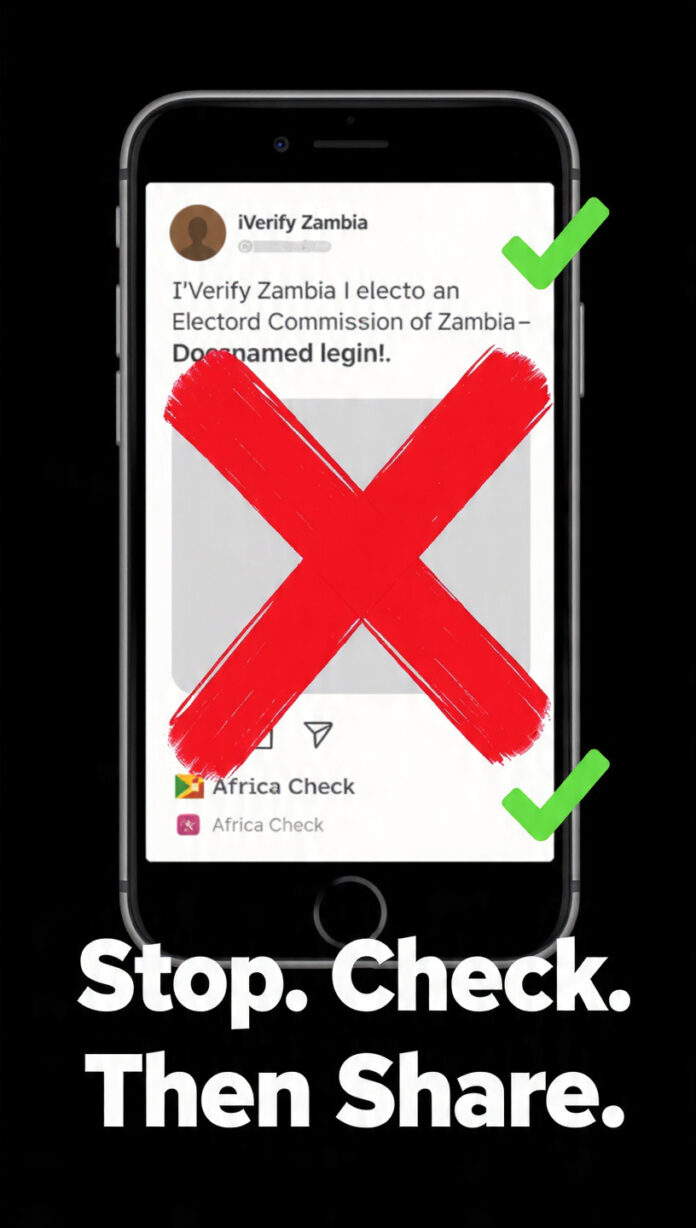
Before sharing information online, citizens should verify the source, check whether the page is authentic, and compare information with trusted news organizations, including the iVerify Zambia media platform, the Electoral Commission of Zambia, and Africa Check.
Social media users should also avoid forwarding emotionally charged content without confirming its accuracy from trusted sources.
A Journalist at Kwithu FM Racheal Chirwa said, during election periods, when national issues are at the centre of public attention, fake social media pages can mislead voters, damage the reputations of political candidates and public institutions, and create unnecessary tension.
”They create unnecessary tension, especially when they publish false information or impersonate former Members of Parliament,” Chirwa said.
She stresses that democracy depends on citizens making informed decisions, but fake social media pages make this increasingly difficult.
Chirwa further explains that citizens often struggle to distinguish between true and false information, making it essential for them to verify information through credible and trusted sources before sharing or acting on it.
In today’s digital age, a single click can either spread the truth or strengthen deception. As Zambia prepares for one of its most important democratic exercises, the fight against fake social media pages requires vigilance from journalists, technology companies and ordinary citizens alike.
The next time a sensational headline appears on your timeline, pause before you share it. In an election, protecting the truth may be just as important as casting your vote.
📸: Ai generated